
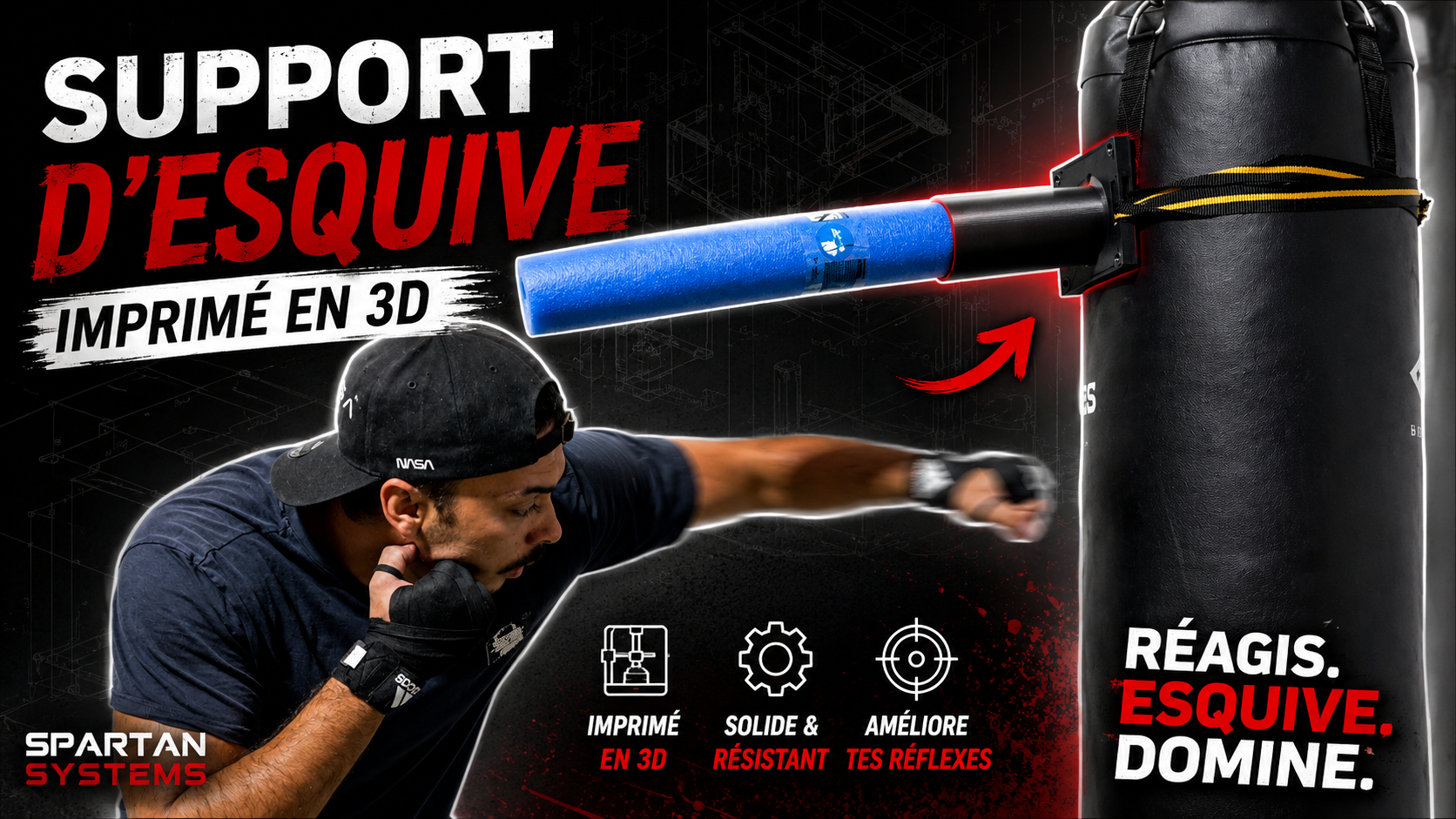
A modular mount that attaches a pool noodle to a wall, a tree, or a heavy bag — turning it into an effective dodge and reflex trainer for boxing and MMA.
Introduction
The idea came from a simple observation: most reflex and slip-training tools are either bulky or expensive.
The goal was to design something:
- compact,
- portable,
- easy to print,
- and usable almost anywhere.
The concept is a 3D-printed mount that holds a standard pool noodle, turning it into an effective training tool for working:
- slips and ducks,
- head movement,
- reflexes,
- and timing.
How it works
The mount can be:
- bolted to a wall,
- tied to a tree,
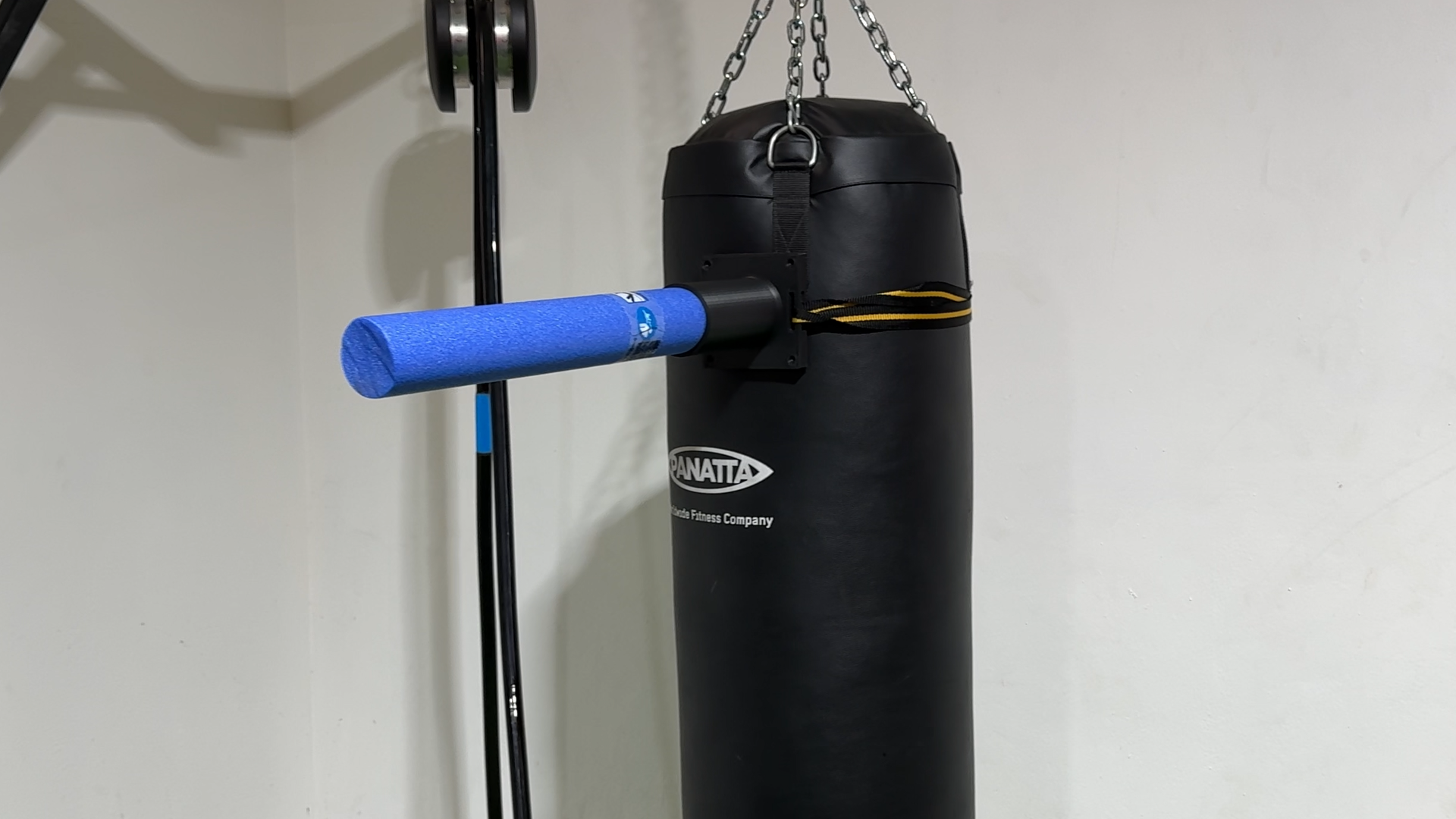
- or strapped to a heavy bag using the side slots.
Once the noodle is in place, it becomes a moving obstacle that replicates boxing and MMA drill patterns.
Requirements
Hardware
- 3D printer
- PETG filament (recommended)
- Standard pool noodle
- Straps
- Screws (optional)
Software
- Fusion 360
- Slicer of your choice (Bambu Studio, Cura, PrusaSlicer)
Design in Fusion 360
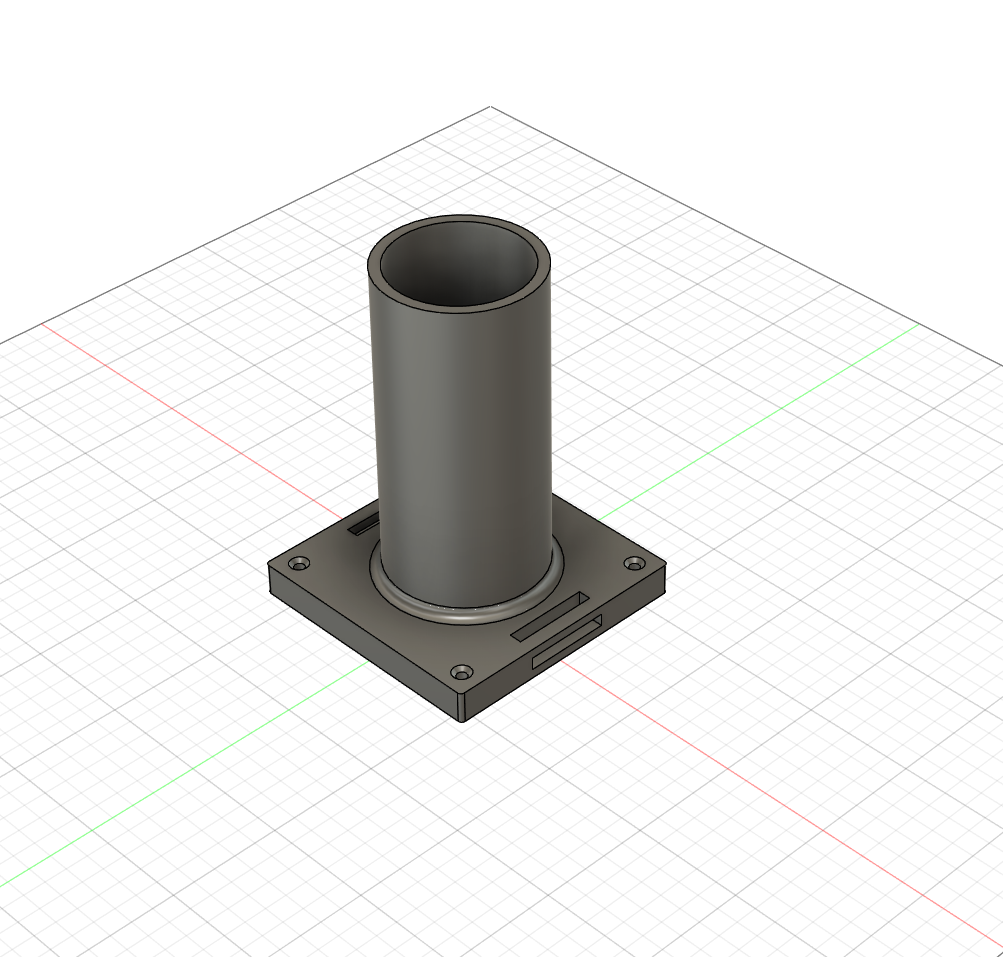
The main objective was a mount that is solid, easy to print, and resistant enough to handle repeated noodle movement.
Key design constraints:
- inner diameter matching a standard pool noodle,
- wall thickness for rigidity,
- strong base,
- strap slots for mounting,
- support-free print geometry.
Material choice
The mount was printed in PETG for:
- better mechanical resistance,
- good flexibility,
- and better outdoor durability.
PLA would have been easier to print but less suited to the repeated mechanical stress and heat exposure.
Print settings
| Parameter | Value |
|---|---|
| Nozzle | 0.4 mm |
| Layer height | 0.2 mm |
| Infill | 20 % |
| Walls | 4 |
| Supports | Not needed |
These settings give a good balance between strength, print time, and filament use.
Assembly
Once printed, the mount attaches quickly with screws or straps. The pool noodle then slides into the main tube.
Field testing
After several tests on a heavy bag and outdoor mounting, the mount proved rigid enough for:
- slip drills,
- fast head movement,
- and combination patterns (slip / weave).
The PETG absorbs repeated stress without cracking.
Conclusion
This project shows what can be built quickly with 3D printing, CAD modeling, and rapid prototyping.
Simple to build, low cost, and easy to improve — Dodge v1 is a solid starting point for experimenting at the intersection of sport, robotics, and mechanical prototyping.
The STL file is available for download above.